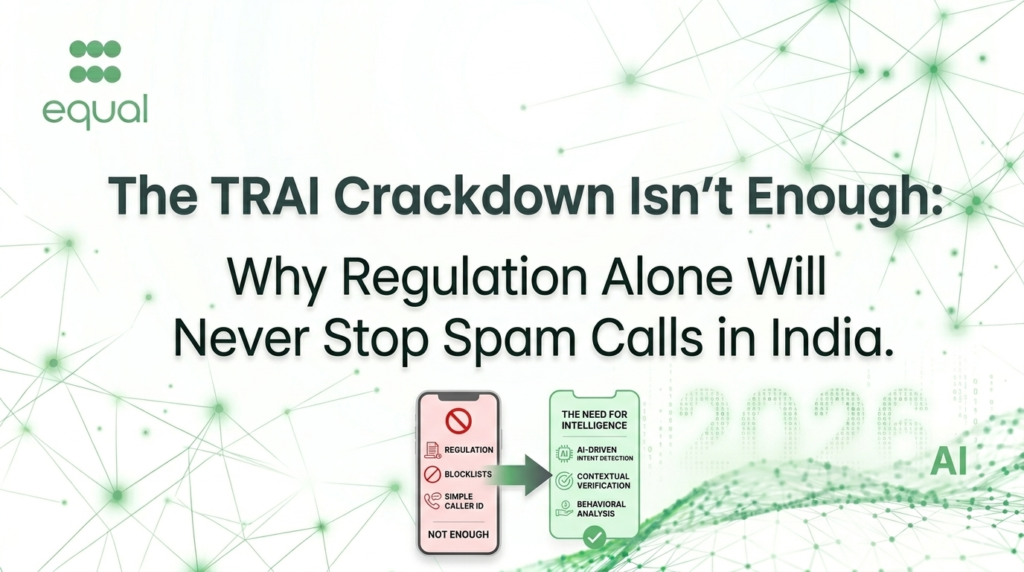
India’s telecom regulator has been fighting unsolicited calls for years — and spam is still exploding. The real solution is AI-powered spam detection at the device level, not at the network level.
Despite the implementation of Telecom Commercial Communications Preference Regulations (TCCCPR) and the recent 2026 draft amendments aimed at tightening the net on unregistered telemarketers, the average Indian smartphone user remains under siege.
While Telecom Regulatory Authority of India (TRAI) has introduced bold measures, such as mandatory 140 series numbering for promotional calls, the disconnection of over 1.8 million fraudulent numbers, and hefty fines on operators, the fundamental nature of spam has evolved beyond the reach of centralized regulation.
The Regulatory Gap: Why Network Blocking Fails?
The primary reason regulation struggles is the sheer scale and speed of modern spam. Network-level filters rely on identifying patterns across millions of users, which often means the damage is already done by the time a number is flagged.
- The Rise of Unregistered Telemarketers: Most spam in India no longer originates from registered entities. It comes from regular 10-digit numbers that bypass the distributed ledger technology platforms designed to monitor them.
- Neighbor Spoofing and Snowshoeing: Scammers frequently rotate through thousands of temporary VOIP numbers. Static unwanted call blockers at the network level cannot keep up with a number that exists for only 20 mins.
- The Context Problem: Regulators cannot easily distinguish between a legitimate delivery partner calling from a new number and a scammer. To avoid good calls, network filters are often forced to be too lenient.
Why India Needs Device-Level Spam Detection?
Device-level protection, such as that provided by Equal AI, offers a granular defense that a national regulator simply cannot provide. When spam detection happens on your phone, it is personalized to your life, your contacts, and your specific needs.
An unwanted call blocker that lives on your device doesn’t just look at a bad number list, it analyzes the behavior of the caller in real time. This is the computing edge of telecommunications.
Instead of waiting for TRAI to blacklist a scammer after multiple complaints, an AI assistant intercepts the very first call from that scammer and vets them on your behalf.
Beyond the Static Block List
The block button is a reactive tool. By the time you press it, your focus has already been broken. Equal AI represents a shift from reactive blocking to proactive management. It functions as a sophisticated spam call blocker by acting as a digital gatekeeper.
- Behavioral Analysis: Unlike traditional apps that just look at caller ID, Equal AI uses an AI call assistant to engage the caller. It asks the caller to state their purpose, effectively stopping automated robocalls that cannot answer open-ended questions.
- Real Time Screening: While AI screens the call, you receive a live transcript. This ensures that you can block spam calls without the fear of accidentally ignoring a legitimate client or emergency service.
- Privacy-First Defense: By handling the interaction locally and providing you with context, Equal AI keeps your data secure while giving you the peace of mind that a national DND registry often fails to deliver.
The Future of Telecom Safety in India
TRAI’s 2026 draft regulations are a step in the right direction, introducing termination charges for automated calls and better cross-network data sharing. However, as long as a SIM card can be bought and a robocall can be generated for pennies, the incentive for spam calls will remain.
The ultimate spam call blocker isn’t a government mandate; it is an intelligent assistant that knows the difference between noise and signal. As we move further into 2026, the responsibility for communication security is shifting. While the regulator builds the walls, the user must install smart locks.
Regulation is the foundation, but AI is the fortress. If you want to truly Block Spam Calls and reclaim your productivity, you cannot wait for the next TRAI circular. You need a device-level solution that understands the nuance of Indian telecom spam.
By integrating Equal AI into your daily workflow, you aren’t just ignoring the problem; you are solving it with the same technology the scammers are trying to use against you. It is time to move past the DND list and embrace the era of the AI receptionist.
FAQs
1. Why is TRAI’s DND registry still failing to stop all spam?
Ans. The DND registry primarily blocks registered telemarketers, but most spam today comes from unregistered 10-digit numbers; Equal AI stops these by screening the intent of the caller in real-time.
2. How does device-level Spam Detection differ from network-level blocking?
Ans. Network blocking is a broad filter that misses many new scams, whereas Equal AI provides a personalized shield on your device that vets every unknown caller specifically for you.
3. Will using an Unwanted Call Blocker like Equal AI block my food delivery calls?
Ans. No, because Equal AI doesn’t just blindly block; it asks the caller for their purpose and shows you a live transcript, so you can see it’s a delivery partner and take the call immediately.
4. Can an AI Call Assistant actually stop sophisticated AI-generated robocalls?
Ans. Yes, Equal AI uses advanced dialogue-based screening that forces robocalls to reveal their automated nature, effectively acting as a high-tech Spam Call Blocker that bots cannot bypass.
5. Is Equal AI better than just reporting spam to the 1909 helpline?
Ans. Reporting to 1909 helps the regulator for the future, but Equal AI protects you in the present by handling the interaction so you never have to deal with the spammer yourself.