Hair loss is a concern shared by millions worldwide, affecting not only appearance but also confidence and self-image. As awareness and technology advance, hair restoration solutions have evolved far beyond basic solutions. Today, individuals considering hair restoration often find themselves choosing between surgical and non-surgical hair transplant options. Both approaches are effective, widely practised, and capable of delivering visible improvement, but they are designed for different needs, stages of hair loss, and personal preferences.
Understanding the Basics of Hair Transplantation
At its core, hair transplants focus on restoring hair density by targeting the root cause of hair thinning or baldness. The goal is to achieve natural-looking hair growth by either redistributing existing follicles or stimulating dormant ones.
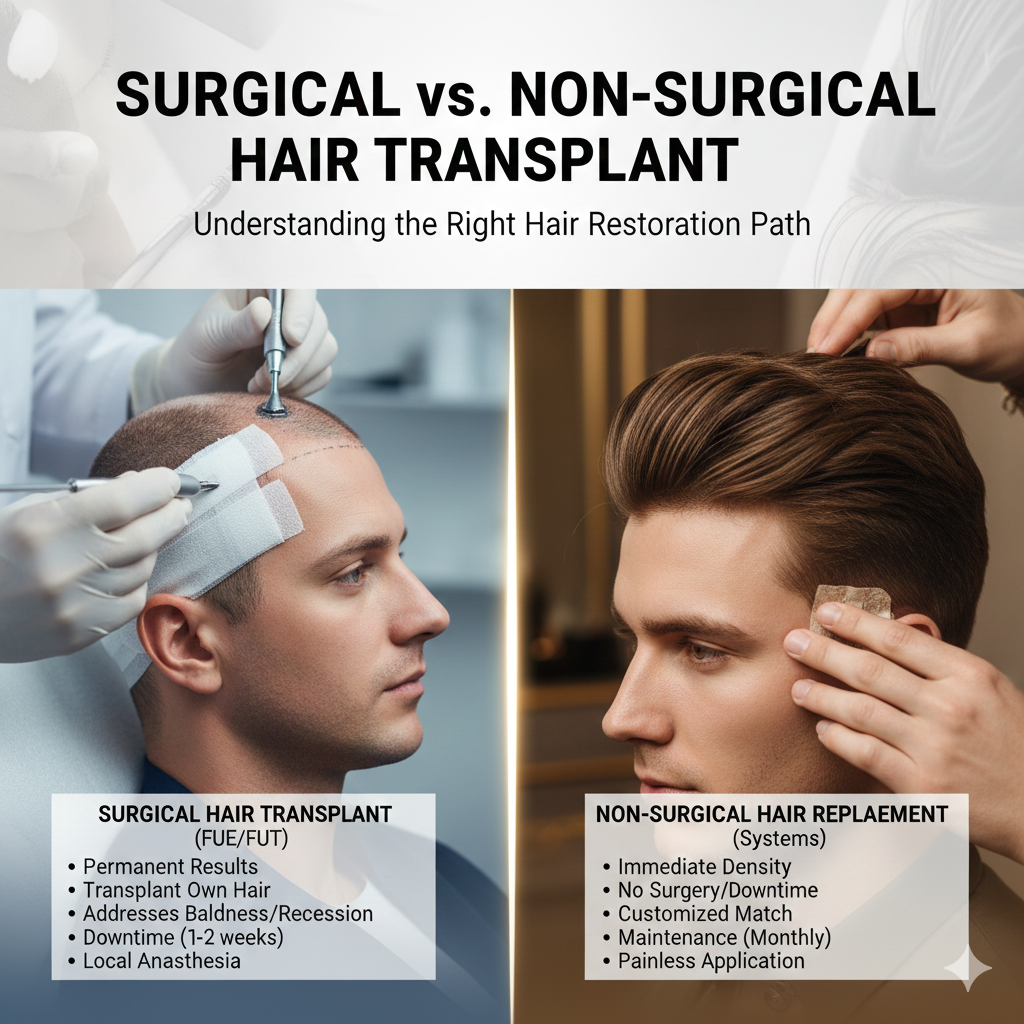
Surgical hair transplant procedures, such as Follicular Unit Extraction (FUE) and Follicular Unit Transplantation (FUT), involve harvesting healthy hair follicles from donor areas, usually the back or sides of the scalp, and implanting them into thinning or bald regions. These transplanted follicles retain their resistance to hair loss, allowing them to grow naturally over time.
Surgical techniques are carefully designed to blend seamlessly with existing hair, delivering long-lasting and often permanent results when performed on suitable candidates.
Non-Surgical Hair Restoration: A Less Invasive Alternative
Non-surgical hair restoration methods offer an alternative approach for individuals who prefer to avoid surgery or are in the early stages of hair thinning. These treatments focus on stimulating natural hair growth, improving scalp health, or providing cosmetic enhancement rather than physically relocating hair follicles.
Popular non-surgical options include:
- PRP (Platelet-Rich Plasma) therapy, which uses growth factors from your own blood to stimulate hair follicles
- Low-level laser therapy is designed to boost follicle activity and blood circulation
- Custom hair systems, which provide immediate visual density for thinning areas
These methods are attractive because they involve minimal discomfort, little to no downtime, and are generally easier to fit into a busy lifestyle. However, they typically require ongoing sessions.
Comparing Surgical and Non-Surgical Hair Restoration
When evaluating surgical vs. non-surgical hair transplant options, several important factors come into play: procedure type, results, recovery time, cost, and longevity.
Surgical hair transplants are invasive procedures performed under medical supervision. They offer permanent, natural hair growth and are best suited for individuals experiencing moderate to advanced hair loss. While recovery can take a few days to weeks, the long-term payoff is significant, as transplanted hair continues to grow naturally for years.
Non-surgical treatments, in contrast, are minimally invasive or non-invasive. They are ideal for individuals in the early stages of hair thinning or those seeking to slow down hair loss rather than fully restore dense areas. Results are gradual and often temporary, requiring regular follow-up treatments to maintain progress.
Both approaches can significantly improve hair appearance and scalp health when used appropriately, and many individuals benefit from combining them at different stages of their hair restoration journey.
Choosing the Right Hair Restoration Approach
Selecting the right hair restoration treatment is a personal decision influenced by several factors:
- Stage of hair loss: Advanced hair loss often responds better to surgical solutions, while early thinning can be managed effectively with non-surgical treatments
- Desired outcome: Those seeking permanent, structural restoration may prefer surgery, while others may prioritise flexibility and gradual improvement
- Budget considerations: Surgical options cost more upfront, whereas non-surgical treatments are more accessible but ongoing
- Downtime tolerance: Individuals with limited recovery time may lean toward non-surgical methods
Importantly, no single approach fits everyone. Many patients find success by combining surgical and non-surgical treatments, using surgery for permanent restoration and non-surgical therapies for maintenance and scalp health.
What’s the Next Step in Your Hair Restoration Journey?
Understanding the differences between surgical and non-surgical hair restoration empowers you to make informed decisions that align with your goals and lifestyle. Surgical methods offer a long-term solution for significant hair loss, while non-surgical options provide flexibility, convenience, and early intervention benefits.
Expert-Guided Hair Restoration at SKIN111
At SKIN111, hair restoration is approached with precision, personalisation, and a deep understanding that every individual’s hair loss journey is unique. Whether surgical or non-surgical, each treatment option is carefully recommended based on your hair condition, expectations, and long-term goals. By combining medical expertise with advanced technology, SKIN111 ensures that your hair restoration plan is not about choosing sides, but choosing what truly works for you.