For years, weight loss advice has followed a simple formula: eat less, move more, and stay consistent every single day. While this approach works for many, it can also feel restrictive, repetitive, and mentally exhausting over time. That’s where a smarter, more flexible strategy is starting to gain attention: the Meal Repetition Hack.
At first glance, the idea sounds counterintuitive. How can eating bigger meals on weekends lead to greater fat loss? The answer lies in understanding how your body responds to consistency, calorie cycling, and behavioral psychology. Instead of treating every day the same, this method introduces controlled variation to keep your metabolism engaged and your motivation high.
In this guide, you’ll learn exactly how the Meal Repetition Hack works, why it’s effective, and how to apply it in real life. Whether you’re just starting your weight loss journey or looking to break through a plateau, this strategy can offer a refreshing and sustainable alternative.
Understanding the Meal Repetition Hack
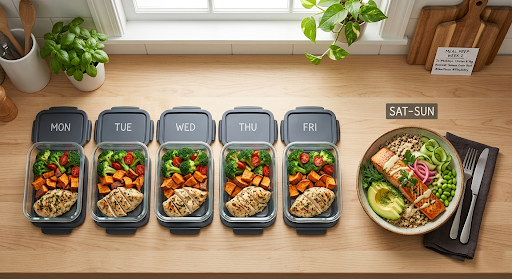
The Meal Repetition Hack is built on two key principles: consistency during the week and flexibility on the weekend. During weekdays, you stick to a structured, repetitive meal plan that simplifies decision-making and keeps calorie intake controlled. Then, on weekends, you allow for larger, more satisfying meals without completely losing control.
This approach works because it reduces “diet fatigue.” When you eat similar meals Monday through Friday, you eliminate guesswork, reduce cravings, and maintain a steady calorie deficit. Then, when the weekend arrives, you enjoy more freedom without derailing your progress.
Moreover, this method aligns with real-life behavior. Most people naturally socialize and eat more on weekends. Instead of fighting this pattern, the Meal Repetition Hack embraces it in a controlled way, making the diet easier to sustain long term.
The Science Behind Calorie Cycling
To understand why bigger weekend meals can still lead to fat loss, it’s important to look at calorie cycling. This concept involves varying your calorie intake throughout the week while maintaining an overall deficit.
For example, if your weekly calorie target is 14,000 calories, you might eat:
- 1,800 calories per day on weekdays
- 2,400–2,600 calories on weekends
Even with higher weekend intake, your total weekly calories remain within a fat-loss range. This balance allows you to enjoy larger meals without sabotaging your progress.
Additionally, calorie cycling may help regulate hormones like leptin and ghrelin, which control hunger and satiety. When you occasionally increase calorie intake, your body may feel less deprived, reducing the likelihood of binge eating or metabolic slowdown.
Why Repetition Works Better Than Variety (At First)
While variety is often promoted as the key to a healthy diet, repetition can actually be more effective for fat loss, especially in the early stages.
Eating the same meals repeatedly:
- Reduces decision fatigue
- Makes calorie tracking easier
- Builds consistent habits
- Minimizes impulsive eating
When your meals are predictable, you’re less likely to overeat or make poor food choices. Over time, this consistency becomes automatic, allowing you to focus on other aspects of your life without constantly thinking about food.
However, the key is balance. Too much repetition can lead to boredom, which is why the weekend “feast” component plays such an important role in keeping the plan enjoyable.
The Psychology of Weekend Eating
Let’s be honest. Most people don’t struggle with their diet on a random Tuesday. The real challenge comes on weekends, when social events, dining out, and relaxation take center stage.
Instead of viewing weekends as a threat, the Meal Repetition Hack turns them into an advantage. By planning for higher calorie intake, you remove guilt and create a sense of control.
This psychological shift is powerful. When you know you can enjoy your favorite foods later, you’re less likely to feel deprived during the week. As a result, adherence improves, which is the most important factor in any successful diet.
Furthermore, this approach reduces the “all-or-nothing” mindset. Even if you indulge a bit more than planned, you can easily get back on track the next day without feeling like you’ve failed.
How to Structure Your Week for Maximum Fat Loss
To implement this strategy effectively, you need a clear plan. Start by calculating your weekly calorie target based on your goals, body weight, and activity level.
Next, divide your calories strategically:
- Keep weekdays lower and consistent
- Allow for higher intake on weekends
- Maintain a weekly calorie deficit
For example:
- Monday to Friday: controlled, repetitive meals
- Saturday and Sunday: flexible, higher-calorie meals
Focus on high-protein, nutrient-dense foods during the week to support muscle retention and satiety. Then, during the weekend, enjoy a mix of your favorite foods while still being mindful of portion sizes.
Consistency is key. Even though weekends are more flexible, they should not turn into uncontrolled binge sessions. The goal is balance, not extremes.
Combining the Hack with Modern Weight Loss Tools
The Meal Repetition Hack becomes even more effective when combined with modern weight loss strategies and tools. Many people today are exploring medical options alongside dietary changes to enhance results.
For instance, medications that regulate appetite and blood sugar can complement this approach by reducing cravings and improving portion control. This is one reason why some individuals are choosing to explore options like mounjaro online. When used responsibly under medical guidance, such tools can support adherence to structured eating patterns.
However, it’s important to remember that no medication replaces good habits. The foundation of fat loss will always be nutrition, consistency, and lifestyle choices. The Meal Repetition Hack simply provides a smarter framework to apply those principles.
Common Mistakes to Avoid
While this strategy is effective, there are a few common pitfalls that can limit your results.
First, overdoing weekend calories can quickly erase your weekly deficit. It’s easy to underestimate how much you’re eating, especially when dining out. Therefore, keep portions in check and avoid turning flexibility into excess.
Second, neglecting protein intake can slow progress. Even during weekends, aim to include sufficient protein in your meals to support muscle maintenance and satiety.
Finally, inconsistency can undermine the entire approach. Skipping weekday structure or extending “weekend mode” into Monday can disrupt your results. Stick to the plan, and you’ll see steady progress over time.
Real-Life Benefits Beyond Fat Loss
One of the biggest advantages of the Meal Repetition Hack is its sustainability. Unlike extreme diets that require constant restriction, this method fits naturally into most lifestyles.
You’ll likely notice:
- Improved relationship with food
- Reduced stress around dieting
- Greater social flexibility
- Better long-term adherence
Additionally, the mental clarity that comes from simplified weekday meals can free up energy for work, fitness, and personal life. Instead of constantly thinking about what to eat, you operate on a system that works.
Over time, this consistency compounds, leading to lasting results rather than short-term success.
Is This Approach Right for You?
The Meal Repetition Hack is not a one-size-fits-all solution, but it works particularly well for people who:
- Struggle with weekend overeating
- Prefer structured routines
- Want a flexible yet controlled diet
- Value sustainability over quick fixes
If you enjoy routine during the week and freedom on the weekend, this approach can feel both natural and effective.
However, if you prefer daily variety or have a highly unpredictable schedule, you may need to adapt the method to suit your lifestyle.
Conclusion
The idea that you must eat the same way every day to lose fat is outdated. The Meal Repetition Hack proves that strategic flexibility can actually improve results.
By combining structured weekday eating with controlled weekend indulgence, you create a system that works with your lifestyle instead of against it. This not only supports fat loss but also makes the journey more enjoyable and sustainable.
In the end, the best diet is the one you can stick to. And for many people, this balanced approach offers the perfect mix of discipline and freedom.