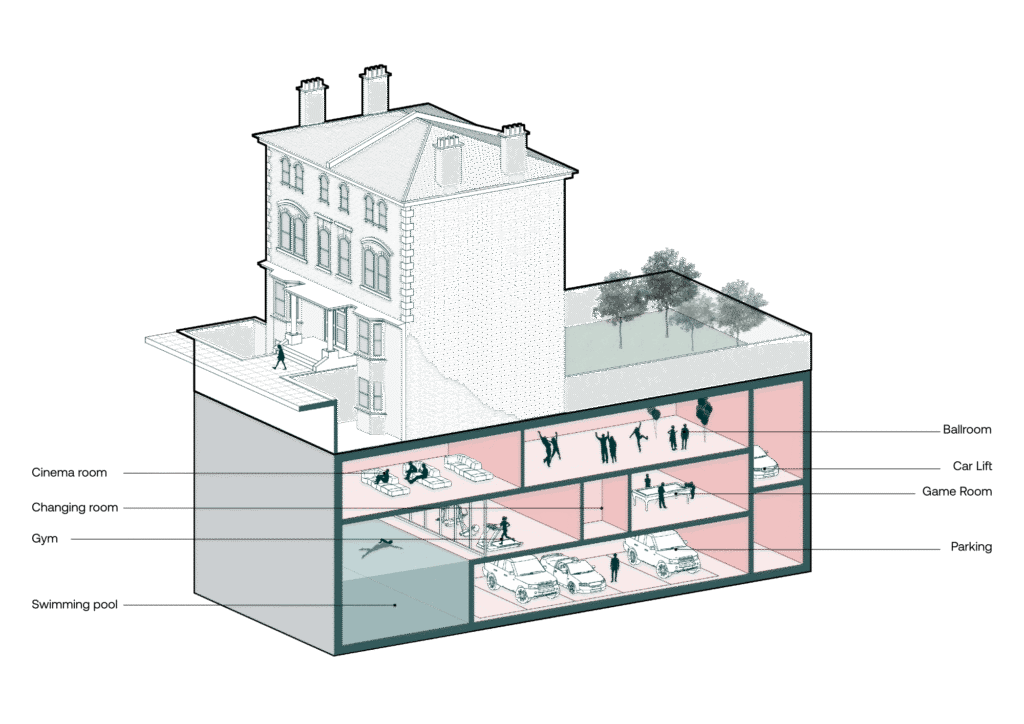
Introduction: Why Basement Conversions Are a Smart Choice in London
London properties often have unused or poorly performing basement space.
At the same time, moving to a larger property is costly and uncertain.
Planning permission for outward extensions is limited.
A professionally delivered basement conversion solves these problems. Industry data shows that a high-quality basement conversion can increase property value by 10 to 20 per cent while improving daily usability.
However, basement conversions are not cosmetic projects. They require careful design, structural checks, waterproofing, and strict compliance. This article explains the London basement conversion through a practical listicle that helps UK working professionals make informed decisions.
How We Selected These Basement Conversion Stages
The stages below were selected using a professional evaluation method:
- Relevance to London building stock and regulations
- Impact on safety and long-term performance
- Cost certainty and risk control
- Suitability for residential and commercial use
- Value created after completion
Basement Conversion Feasibility and Design
Why Feasibility Comes First
Not every basement can be converted without changes. Ceiling height, structure, and moisture levels must be assessed early.
Professional feasibility and design includes:
- Structural assessment
- Headroom and layout planning
- Waterproofing strategy selection
- Fire safety and access planning
Benefits for Working Professionals
- Clear understanding of costs and limitations
- Reduced planning and approval risks
- Better design decisions before construction starts
Structural Assessment and Load Analysis
Understanding the Existing Structure
Many London buildings are over a century old. Load paths and foundation capacity vary widely.
Structural analysis typically covers:
- Foundation strength
- Wall and floor loading
- Impact of new uses on the structure
Why This Matters
- Prevents cracking and movement
- Ensures compliance with Building Regulations
- Protects neighbouring properties
Basement Conversion, Excavation, and Dig Out
When Excavation Is Required
Some basement conversions need floor lowering to achieve usable headroom. This is controlled excavation work.
Key excavation steps include:
- Sequenced dig out
- Temporary structural support
- Controlled spoil removal
Value for Property Owners
- Achieves compliant ceiling height
- Improves comfort and usability
- Protects the building during works
Waterproofing and Moisture Control Systems
Managing Water Risk in London
Water ingress is the most common cause of basement conversion failure. Many London areas have high groundwater levels.
Professional waterproofing options include:
- Tanking systems
- Structural waterproof concrete
- Cavity drainage systems
Benefits for End Users
- Dry and healthy living or working space
- Lower maintenance costs
- Improved indoor air quality
Structural Strengthening and Alterations
Adapting the Basement for New Use
Conversions often require new openings, steelwork, or floor strengthening.
Structural works may include:
- Steel beam installation
- Wall strengthening
- Staircase formation
Why Quality Structural Work Matters
- Supports new loads safely
- Improves long-term durability
- Allows flexible space use
Drainage, Ventilation, and Building Services
Making the Space Functional
A converted basement must perform like any other part of the building.
Service integration includes:
- Drainage and pump systems
- Ventilation and air circulation
- Electrical and data installations
Benefits for Professionals
- Comfortable and compliant space
- Reduced condensation and damp risk
- Faster final approvals
Fire Safety and Building Regulation Compliance
Safety Is Not Optional
Basement conversions must meet strict safety standards.
Key compliance areas include:
- Fire escape routes
- Smoke detection systems
- Ceiling height and access rules
Why This Protects Your Investment
- Legal compliance
- Improved occupant safety
- Stronger resale and rental appeal
Interior Fit Out and Final Finishes
Turning Structure Into Usable Space
Once structural and waterproofing works are complete, the basement is finished.
Fit out includes:
- Insulation and plastering
- Flooring and lighting
- Joinery and storage
Value Created at This Stage
- High-quality usable space
- Improved comfort and aesthetics
- Strong long-term performance
Choosing the Right Contractor for a London Basement Conversion
Before appointing a contractor, professionals should review:
- Proven basement conversion experience in London
- In-house design and structural capability
- Waterproofing expertise
- Clear programme and cost control
- Strong health and safety systems
Final Thoughts: Converting Basements With Confidence
A London basement conversion is one of the most effective ways to unlock value and usable space without changing the building footprint. When delivered through expert design, structural control, and compliant build practices, the results are long-lasting and reliable.
For UK working professionals, a professionally managed basement conversion delivers:
- Increased usable space
- Higher property value
- Reduced moisture and structural risk
- Strong compliance outcomes