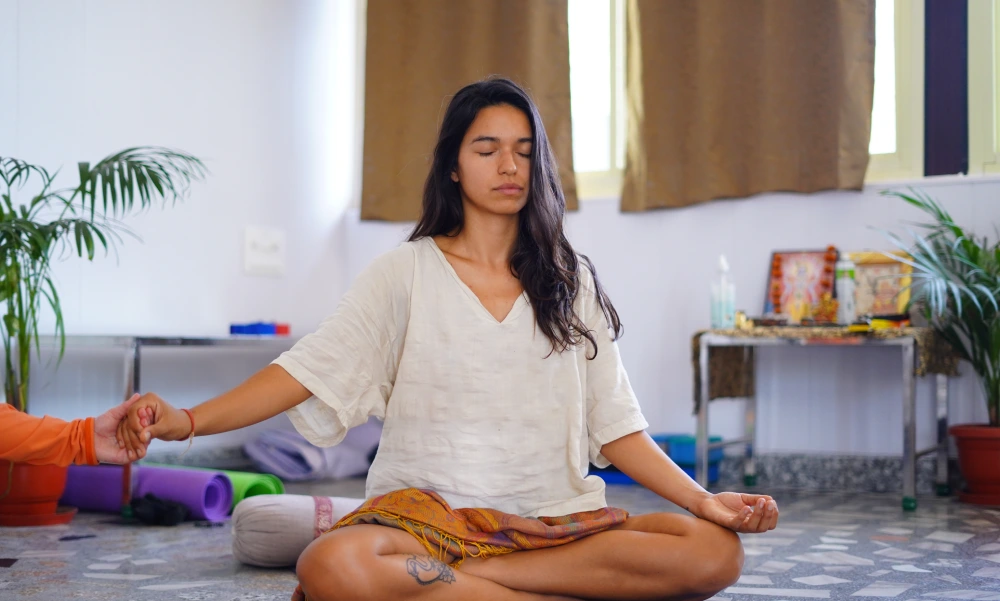
Working professionals in the US often reach a point where basic yoga no longer feels enough.
The body adapts. The mind seeks more structure. Progress slows.
Recent workplace wellness studies show that consistent mind-body training improves focus, reduces burnout, and supports long working hours. Yet many professionals lack a system that goes beyond beginner practice.
A 300 Hour Yoga Teacher Training in Rishikesh is designed for this stage.
It offers depth, discipline, and practical learning without disconnecting from professional goals.
Why Professionals Look for an Intermediate Yoga Course
After completing a 200-hour course or years of self-practice, common gaps appear.
- Limited understanding of anatomy
- Inconsistent meditation habits
- Fear of injury during advanced postures
- Lack of confidence in structured teaching
An intermediate program addresses these issues with progressive learning.
Methodology Used to Evaluate This Training Program
The recommendations below are based on:
- Suitability for US working professionals
- Balance between physical and mental training
- Safety-focused progression
- Practical use in daily work life
- Certification value and global relevance
Each component supports long-term practice, not short-term intensity.
What a 300 Hour Yoga Teacher Training in Rishikesh Covers
Below is a listicle overview of the core learning areas included in most intermediate programs.
1. Intermediate Asana Practice
This stage refines alignment and control.
You focus on:
- Strength building
- Mobility improvement
- Breath coordination
Ideal for: Professionals wanting physical stability without strain.
2. Applied Yoga Anatomy
Understanding movement reduces injury risk.
This module explains:
- Muscle engagement
- Joint safety
- Postural correction
Ideal for: Desk-based and remote workers.
3. Pranayama and Breath Regulation
Breath impacts stress and focus.
Training includes:
- Controlled breathing patterns
- Nervous system balance
- Energy management
Ideal for: High responsibility roles and leadership positions.
4. Meditation and Focus Training
Mental fatigue is common in demanding careers.
This section covers:
- Concentration techniques
- Mind awareness
- Emotional regulation
Ideal for: Professionals handling decision pressure.
5. Yoga Philosophy for Modern Life
Philosophy supports discipline and clarity.
You study:
- Core yogic principles
- Ethical practices
- Lifestyle application
Ideal for: Those seeking balance beyond physical fitness.
6. Teaching Methodology Basics
Teaching skills also improve communication.
You learn:
- Class sequencing
- Instruction clarity
- Student observation
Ideal for: Team leads and educators.
7. Alignment and Adjustment Techniques
Safety is a priority at the intermediate level.
This module teaches:
- Correct posture support
- Awareness-based adjustments
- Injury prevention
Ideal for: Practitioners aiming for precision.
8. Therapeutic Yoga Introduction
Yoga supports recovery and prevention.
Focus areas include:
- Back and neck care
- Stress related disorders
- Lifestyle issues
Ideal for: Professionals with recurring discomfort.
9. Practice Teaching Sessions
Experience builds confidence.
This section includes:
- Supervised teaching
- Structured feedback
- Skill refinement
Ideal for: Those considering future teaching.
Certification and Global Recognition
Most programs align with Yoga Alliance standards.
This ensures:
- International acceptance
- Teaching eligibility
- Professional credibility
Ideal for: US professionals planning long-term options.
Why Rishikesh Is Chosen for Intermediate Training
Rishikesh provides:
- Traditional learning environment
- Focused daily routines
- Experienced instructors
- Minimal external distraction
This setting supports discipline and consistency.
Key Benefits for US Working Professionals
- Better stress control
- Improved posture and mobility
- Clearer mental focus
- Sustainable daily routines
- Optional career flexibility
The training complements professional life rather than replacing it.
Who Should Enrol in a 300 Hour Yoga Course
- Professionals with prior yoga experience
- 200 hour certified practitioners
- Individuals seeking structured growth
- Those planning long-term practice
Frequently Asked Questions (FAQs)
1. Is a 300-hour yoga course suitable for working professionals?
Yes. It is designed for structured and progressive learning.
2. Do I need a 200 hour certification?
Most schools require prior training or equivalent experience.
3. Is the course physically intense?
Intensity increases gradually with safety focus.
4. Can this training help with work stress?
Yes. Breath and meditation practices support stress control.
5. Is the certification valid in the US?
Yes. Programs aligned with Yoga Alliance are widely accepted.
6. How long does the 300 hour training take?
Typically 4 to 6 weeks depending on the school.
7. Is teaching mandatory after completion?
No. Teaching is optional.
8. Can remote professionals benefit from this course?
Yes. Practices apply directly to home based routines.
9. Is Rishikesh safe for international students?
Yes. It is a well-known yoga education center.
10. Does this course support long-term practice?
Yes. It focuses on sustainable discipline and growth.
Final Thoughts
A 300 Hour Yoga Teacher Training in Rishikesh bridges the gap between basic practice and advanced study.
For US working professionals, it offers depth, structure, and practical benefits that support both career and health.